Estimating the impact of grazing management in rangelands and pastures
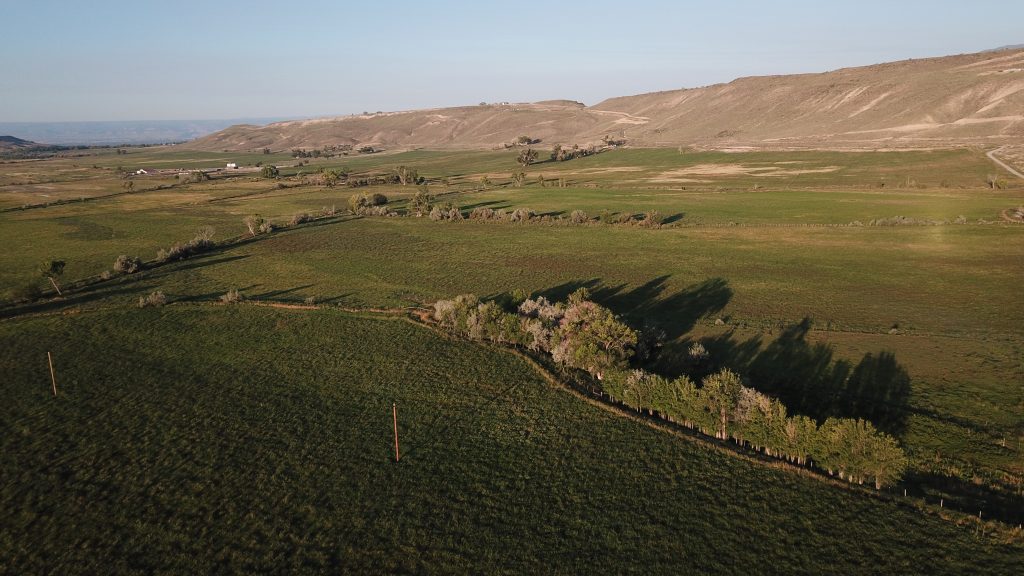
Rangelands and pastures comprise approximately 29% of U.S. agricultural land and 66% of global agricultural areas, playing a crucial role in both food security and carbon sequestration through holding substantial soil organic carbon (SOC) stocks. Different grazing management approaches, from conventional to regenerative practices, significantly influence forage production and greenhouse gas (GHG) emissions in these ecosystems. Our team is developing MEMS to better understand these dynamics and quantify how different grazing strategies affect plant productivity and GHG fluxes.
In our 2024 paper (Santos et al., 2024), we described the model improvements for grazing simulations including incorporating perennial grass growth and grazing submodules to simulate grass green-up and dormancy, reserve organ dynamics, the influence of standing dead plant mass on new plant growth, grass and supplemental feed consumption by animals, and their feces and urine input to soil. Further, we improved the model to simulate the selective grazing behavior of livestock on forage production and SOC by simulating their distribution on the landscape (preprint DOI). Currently, we are testing the model with sites spanning multipe ecological –regions, including Mississippi, Oklahoma, Michigan, Wyoming, North Dakota
Simulating regenerative management practices impacts on soil organic carbon and N2O emissions in temperate and tropical croplands
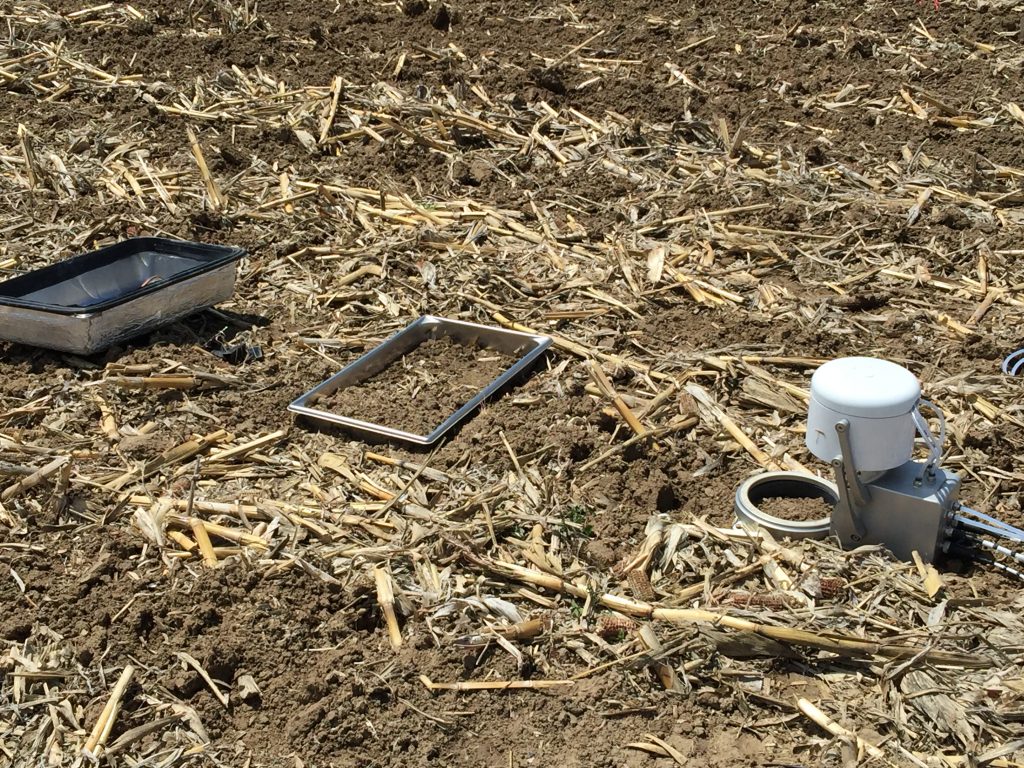
Croplands represent a significant opportunity for enhancing soil carbon accrual and reducing greenhouse gas (GHG) emissions through improved management practices. Our research focuses on quantifying how regenerative agricultural practices, such as cover cropping and reduced tillage intensity, can enhance soil health while contributing to climate change mitigation and crop production. We are advancing our modeling framework to mechanistically represent key processes that drive GHG dynamics in agricultural systems, including nitrous oxide (N2O) production pathways, microbial biomass dynamics and their influence on soil organic carbon decomposition, and soil aggregation effects on carbon stabilization.
Our model validation and application spans diverse agricultural regions, from temperate to tropical ecosystems, including the U.S. Corn Belt, semi-arid Colorado, Hawaii, Kenya, Nigeria, and Brazil. This broad geographical scope allows us to evaluate the effectiveness of regenerative practices across different climatic conditions and soil types.
Pyrogenic Carbon: improving the simulation of fire effects and biochar addition to soils
Pyrogenic Carbon (PyC) is one of the largest unknowns in the global carbon (C) cycle. Generated from biomass combustion during wildfire, fire management practices, or application of biochar, PyC is a ubiquitous and long-lived pool of soil C, whose dynamics have implications on the global C cycle, which shapes ecosystem resiliency to climate change. To represent this unique C pool, we are developing a MEMS-PyC model.